
Article
How to scope your first HR advisory engagement
A worked discovery and scope exercise for your first HR advisory client.
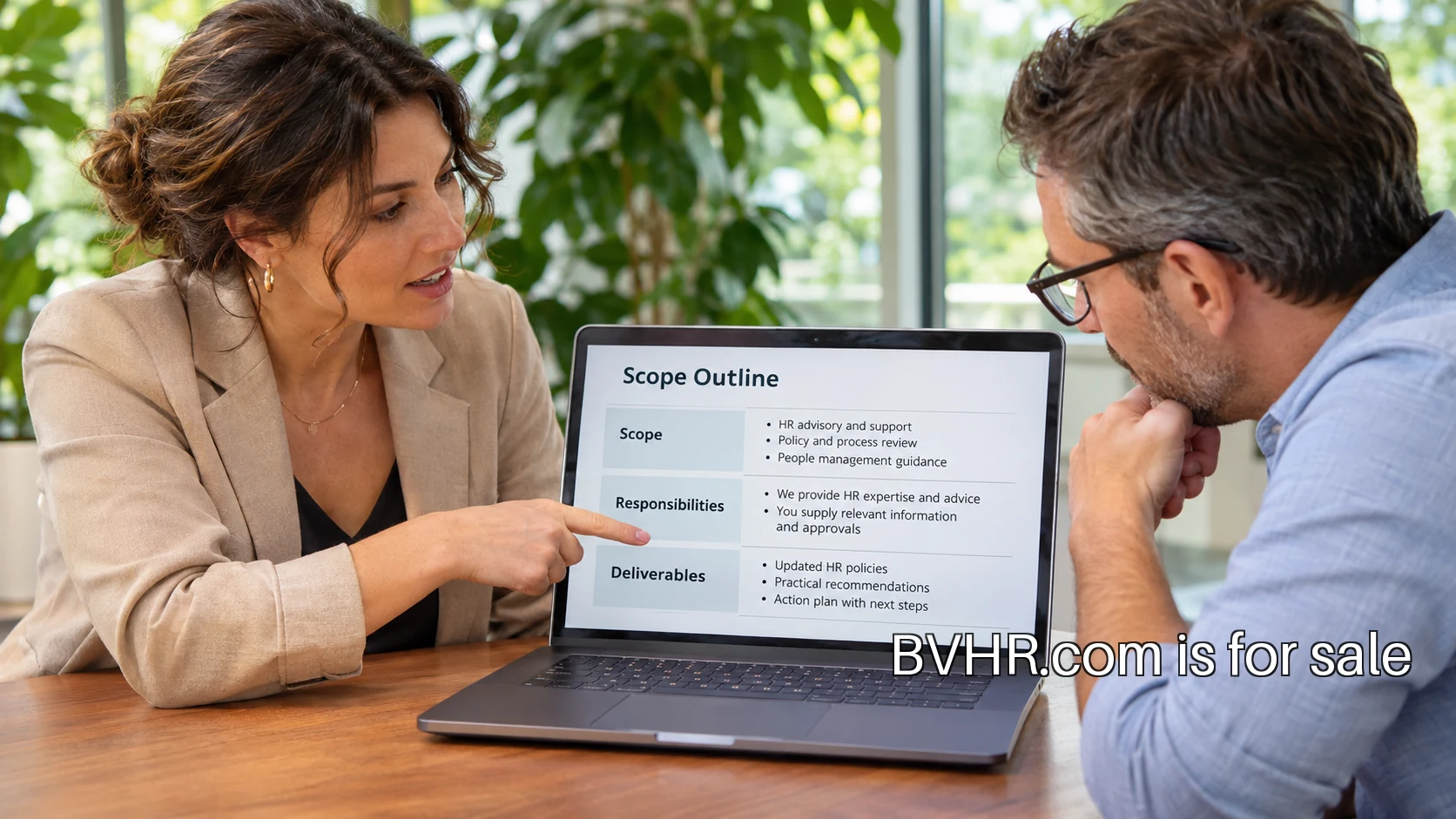
Your first HR advisory engagement can become several different jobs before the first month is over. A founder asks for help with manager routines, then adds a hiring question, an onboarding problem and a request to rewrite a policy. Each request may be reasonable on its own. Together, they can leave both sides unsure what the engagement was meant to deliver. A useful scope turns the opening conversation into a clear piece of work with an owner, an output and a boundary.
This article walks through a hypothetical engagement with an owner-led service firm introducing its first layer of managers. The example is an operating exercise for advisers, not a description of a BVHR client. Adapt the method to your qualifications, the actual client and the professional requirements of the work. The goal is to leave discovery with enough clarity to write a proposal that both sides can use during delivery.
Begin with the event that prompted the call
Ask what happened recently that made the owner seek help. “We need HR support” is an opening, not a scope. Perhaps three new managers are asking the owner the same questions, and the owner wants a more consistent way to handle them. Ask for one recent example. What was the question, who was involved, what did the owner do and what remained unresolved? Keep the discussion close to observed work.
Then ask what the client wants to be different at the end of the engagement. The answer may be a decision, a process or a capability. In this example, the owner wants managers to prepare for routine people conversations and know when to involve someone else. That is more workable than a promise to improve the entire employee experience. You can build a scope around a defined change without claiming control over every outcome.
Map who will take part
Identify the sponsor, the day-to-day contact, the people doing the work and the person who can approve a deliverable. Those roles may belong to different people. If the owner sponsors the engagement but an operations lead controls the information you need, involve that lead early. Otherwise, a proposal can be approved while the actual work has no practical route through the organization.
Ask who else needs to be consulted. A manager routine might touch an existing HR provider, a legal adviser or a team responsible for records. Clarify where your contribution stops and where another person’s expertise begins. Do not let a broad job title become an assumption that you can give every kind of advice. A clear referral or review route can be part of a useful engagement design.
Describe the first deliverable in ordinary language
For the worked example, the first deliverable could be a manager conversation guide and a short escalation map. The guide helps a manager prepare the purpose, relevant facts, questions and follow-up for a routine conversation. The map identifies which internal contact handles questions outside that routine. Write down what the client will receive, what it will be used for and who needs to review it before use.
Avoid starting with a number of documents. Five templates can still leave the client unable to act. Instead, connect each item to a task: prepare a check-in, record agreed actions or identify the next person to involve. If a proposed item has no clear user or moment of use, ask why it belongs in the scope. This keeps the engagement focused on work rather than the appearance of a large package.
Use discovery to test the design
Plan a small discovery sequence. Speak with the owner, the operations lead and a sample of managers. Ask each person to walk through the same recent situation from their perspective. Compare where they agree and where the process changes depending on who is describing it. Those differences are useful evidence about what needs clarification before you design a shared routine.
If onboarding is part of the problem, the CIPD induction resource can help you frame questions about the information a starter needs. Keep that as context, then ask the client to show how its own handoff works. The discovery finding should describe the actual gap, such as an unowned manager briefing, rather than announce that the company needs every item on a general checklist.
Separate delivery from client responsibilities
A scope should say what the adviser will do and what the client must provide. In this example, the adviser might conduct interviews, draft the guide and facilitate a review session. The client might provide existing process material, schedule participants and nominate an approver. Put those responsibilities next to the planned sequence so the dependencies are visible before work starts.
Also describe what happens if a dependency is delayed. A review meeting cannot resolve a draft that the relevant people have not read. The answer may be to move the review, reduce the first version or agree a different approver. You do not need to predict every interruption, but you do need a way to discuss one without silently expanding the adviser’s obligation.
Define the boundary with examples
A useful boundary is concrete. The engagement includes designing a routine manager check-in guide; it does not include attending every manager conversation. It includes identifying the appropriate internal escalation route; it does not include handling every issue that route receives. Where specialist legal, tax or other regulated advice is needed, name the requirement for the appropriate professional rather than implying it is covered by general advisory support.
If the client asks for a new hiring interview process during the engagement, treat it as a change to discuss. The OPM structured interview material is a process reference for connecting questions to the role. It does not make that additional design work part of the original scope. Decide together whether to replace an agreed item, add a separate piece of work or defer it.
Agree what completion looks like
For the example, completion might mean that the guide has been reviewed by the named client approver, tested in a manager walkthrough and handed over with agreed revisions. That is something both sides can observe. “Managers are confident” is harder to use as a completion condition because it depends on more than the adviser’s deliverable and may mean different things to different people.
Write the review and acceptance steps before you send the proposal. Who provides feedback, how is it consolidated and when is the final version considered handed over? A single client contact can gather comments so the adviser does not have to reconcile contradictory instructions without a decision maker. Keep the process proportionate to the work; a small engagement needs clarity more than ceremony.
Turn the conversation into a one-page working scope
The final page can contain the client situation, intended change, deliverables, sequence, responsibilities, exclusions and change process. Add commercial terms through an appropriate agreement with professional support where needed. Read the operational scope aloud to the client. If it sounds unlike the problem they described, fix that mismatch before polishing the proposal’s design.
Your immediate next step is a discovery agenda with six questions: what prompted the call, what should change, who is involved, what work exists today, what must be reviewed and what sits outside your role. Use the answers to draft one useful first engagement. A focused scope gives a new advisory firm something it can deliver carefully, explain clearly and improve after the first handover.
Put BVHR on your next introduction.
Discuss the name, your plans and a possible acquisition.